Independent performance information
In 2020, New Zealand Lowline breeders identified an opportunity to enter Australian Lowline genetics in Beef + Lamb New Zealand’s Dairy Beef Progeny Test, now known as the Beef-on-Dairy Progeny Test.
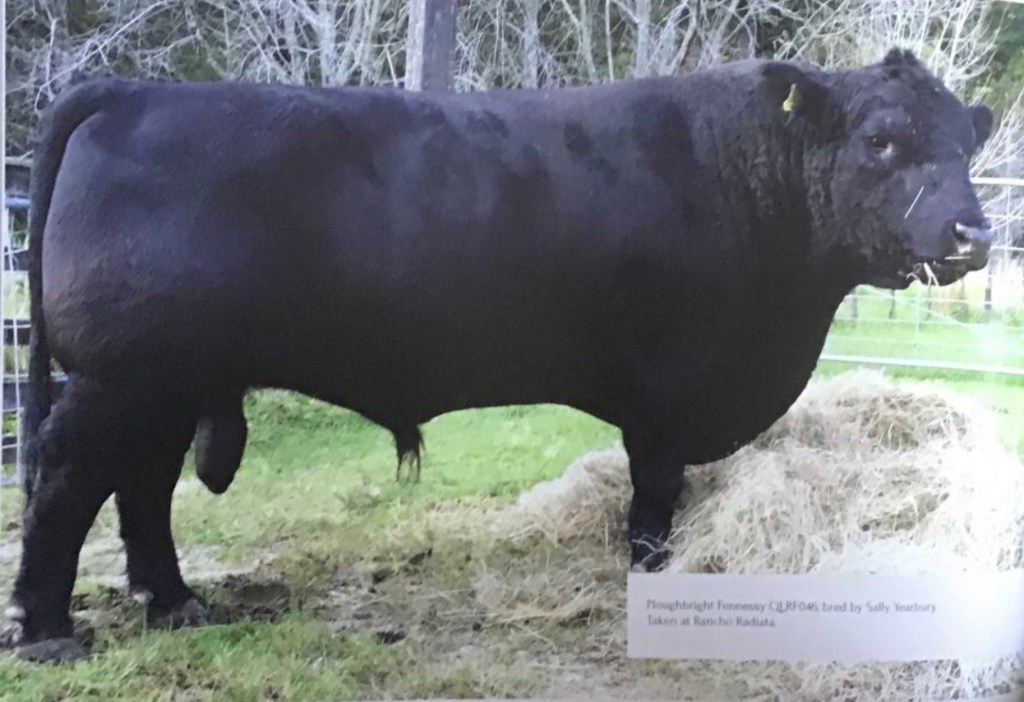
The Australian Lowline Cattle Association funded the entry of New Zealand-bred sire Ploughbright Fennessy. ALCA deserves recognition for supporting this opportunity and helping establish independently collected performance and carcase information for Australian Lowline-cross cattle.
Semen previously collected from Fennessy by his breeders, David and Christina Clee of Rancho Radiata, was used over New Zealand crossbred dairy cows. His progeny were born in spring 2021 and raised alongside the progeny of sires from several larger beef breeds under the same commercial conditions.
Performance was recorded throughout their lives, including liveweight, eye-muscle area, intramuscular fat, carcase weight, marbling and fat depth.
What did the results show?
The cattle in the 2021 cohort were scanned at an average age of 842 days and processed at an average age of 897 days, or approximately 29½ months.
As expected, the larger and faster-growing breeds produced heavier cattle and heavier carcases. The Fennessy progeny were lighter than the average across all trial sires, but demonstrated several notable carcase-quality attributes.
Ploughbright Fennessy progeny compared with the trial average
- Liveweight at scanning: 490 kg, compared with 548 kg
- Eye-muscle area: 78.8 cm², compared with 77.8 cm²
- Intramuscular fat: 6.1, compared with 5.0
- Pre-slaughter liveweight: 510 kg, compared with 579 kg
- Carcase weight: 244 kg, compared with 280 kg
- Dressing percentage: 48.7%, compared with 49.0%
- Marbling score: 350, compared with 333
- Rib-fat depth: 6.1 mm, compared with 4.9 mm
These results show that the Fennessy progeny did not match the final weight of the larger breeds. However, they maintained a slightly above-average eye-muscle area and recorded higher intramuscular fat, marbling and fat cover.
The importance of processing age
Australian Lowlines are generally earlier-maturing than many larger beef breeds. However, all cattle in this cohort were processed at broadly similar ages rather than when each sire group individually reached its most appropriate finishing point.
The greater fatness and marbling of the Fennessy progeny at the common late processing age are consistent with earlier maturity. This raises the possibility that they could have reached a suitable finishing point sooner.
The trial was not designed to test that possibility, so it cannot tell us the optimum processing age of the Fennessy progeny or how their economics might have changed under an earlier-finishing system.
Feed intake was not measured, so no conclusion about feed efficiency can be drawn from this trial.
What can breeders learn from the trial?
The results demonstrate that Australian Lowline genetics can contribute useful muscling and carcase quality when crossed with dairy cattle. They also confirm that selecting the right genetics matters when growth rate and commercial carcase specifications are important.
Australian Lowlines vary considerably in mature size, growth, structure and finishing ability. Buyers intending to produce commercial beef should ask breeders for:
- recorded weights at known ages
- mature weights and heights of parents and close relatives
- information about feet, legs and temperament
- carcase or ultrasound measurements, where available
- performance records from previous progeny
- an explanation of the breeder’s selection objectives
Not every Australian Lowline is intended for the same environment or market. Smaller cattle can remain appropriate for lower-input properties, dry environments, lifestyle farming and other specialised purposes. Cattle intended for commercial beef production should be selected from genetic lines with the growth and carcase performance needed for that particular production system.
A useful beginning
The Fennessy trial involved one Australian Lowline sire and a relatively small progeny group. It should not be treated as a verdict on the entire breed.
Instead, it provides an important starting point. ALCA’s investment gave Australian Lowline breeders independent evidence of both the opportunities and the limitations, while identifying questions that deserve further investigation—particularly the potential value of processing earlier-maturing Lowline-cross cattle when they are ready rather than at a common age.
Further information
Read the complete Beef + Lamb New Zealand Dairy Beef Progeny Test Report – July 2024
Learn about the Beef + Lamb New Zealand Beef-on-Dairy Progeny Test